1st International Workshop Co-located with IEEE ISMAR 2026
AHIMR'26

AI-Mediated Heads-Up Interaction in Wearable Mixed Reality

October 5, 2026 Bari, Italy · Hybrid Published in ISMAR Adjunct Proceedings · IEEE Xplore
Submission deadline
July 5, 2026
until submissions close
The shift

From what to display to how an agent decides

As smartglasses, head-mounted displays, and body-worn devices move from research prototypes to mass-market products — Apple Vision Pro, Meta AI Glasses, Android XR — the central design challenge in wearable mixed reality is no longer what to display. The harder question is how an AI agent should decide what to surface, in what form, and when, on behalf of a user whose attention is divided between physical and digital contexts.

AHIMR'26 focuses on AI-mediated interaction in mixed reality: systems where an AI agent, rather than the user, decides how information is transformed, timed, and delivered through wearable MR devices. This is the defining mechanism of the Heads-Up Computing paradigm — the system adapts to the user's state rather than the user adapting to the device — grounded in resource-rational HCI, where human attention is a finite resource to steward rather than exploit.

Topics of interest

Three interdependent challenges

Every AI-mediated MR system must solve all three. We organize the workshop — and the call — around them.

Cluster 1

Sensing & Modelling

How the AI knows the user's state
  • Real-time attention & cognitive load estimation from commodity wearable sensors
  • Context and physical activity recognition for adaptive MR interfaces
  • Computational models and simulations of user behaviour for wearable MR
  • Multimodal user state inference: gaze, voice, IMU, physiological signals
Cluster 2

Transformation & Delivery

How the AI re-authors & times information
  • Conversational and multimodal information access for wearable MR
  • Intelligent retrieval and summarisation for heads-up interaction
  • Context-aware search and recommendation in MR environments
  • Multimodal output selection: voice, gaze, peripheral display, haptics
  • Proactive AI assistance and knowledge surfacing on wearable devices
  • Delivery optimisation under divided attention: timing, urgency, form, density
Cluster 3

Trust, Agency & Ethics

What it means for AI to act on your behalf
  • User trust and control when AI suppresses, modifies, or delays information
  • Social acceptability and privacy of AI-mediated wearable MR in public
  • Human agency and oversight in AI-mediated MR systems
  • Evaluation methodologies for real-world deployment
Format · Half-day · Date TBA

A working session, not a mini-conference

Keynotes and curated papers set up the problems; a structured debate and world‑café breakouts produce written outputs the community keeps. The exact number of talks will depend on accepted submissions — the schedule below shows the planned rhythm of the day.

9:00–9:10

Opening & Framing

What does good AI mediation look like on wearable MR devices?

9:10–10:10

Invited Keynote(s) Sensing & Delivery

One or two framing talks on AI‑mediated sensing and information transformation for heads‑up contexts.

10:10–10:55

Curated Presentations Full Papers + Flash Talks

Longer and shorter talks drawn from accepted submissions, grouped around the three workshop clusters.

10:55–11:15

Coffee Break

11:15–11:45

Emerging Directions

Additional talks and position statements — work‑in‑progress and provocative ideas across all themes.

11:45–12:30

Breakout Sessions World‑café

Three parallel groups, one open problem each: reliable attentional sensing; automating information transformation for wearable MR; formalising the AI delivery objective function.

12:30–12:55

Reports & Synthesis

Rapporteurs present written problem statements; a panel synthesises findings and sets priority next steps.

12:55–13:00

Closing

Why it matters

Objectives & expected outcomes

Objectives

  1. Establish AI-mediated interaction as a first-class research topic within ISMAR, distinct from prior AR and mobile HCI framings.
  2. Surface and stress-test the three open problems blocking progress: user-state sensing, AI-automated transformation, and the delivery objective function.
  3. Create a shared vocabulary and evaluation criteria researchers can use to compare and build on each other's work.
  4. Connect MR systems research with HCI, AI agents, interactive IR, multimodal interfaces, cognitive modelling, and wearable computing.

Expected outcomes

  • Three written open-problem statements — one per breakout group — published as a community document after the workshop.
  • A set of IEEE Xplore-indexed papers establishing the field's current state.
  • A shared research agenda identifying the most tractable next steps for AI-mediated MR.
  • A seed document toward a future TOCHI or IEEE TVCG special-issue call.
Call for papers

Submit your work

We welcome completed research, work-in-progress, and position statements across all three clusters.

Submit your work at https://easychair.org/conferences/?conf=ahimr26

Submission format

All submissions must use the IEEE Computer Society VGTC conference format. Templates and detailed guidelines are at tc.computer.org/vgtc/publications/conference. The submission site is https://easychair.org/conferences/?conf=ahimr26.

Submissions undergo peer review by the program committee. For accepted papers, camera-ready versions must also use the IEEE VGTC format; they appear in the ISMAR 2026 Adjunct Proceedings on IEEE Xplore.

Full papers
4–6 pages · completed research
Short papers
2–3 pages · work-in-progress or position statements

Questions? Contact shengdong.zhao@cityu.edu.hk.

Key dates

CfP availableJun 19, 2026
Paper submission deadlineJul 5, 2026
Acceptance notificationJul 17, 2026
Camera-ready dueJul 31, 2026
WorkshopOct 5, 2026

All deadlines are 23:59 Anywhere on Earth (AoE).

Organizers

Who's running it

A cross-institutional team spanning Heads-Up Computing, AR/MR systems, wearable input, and interactive information access.
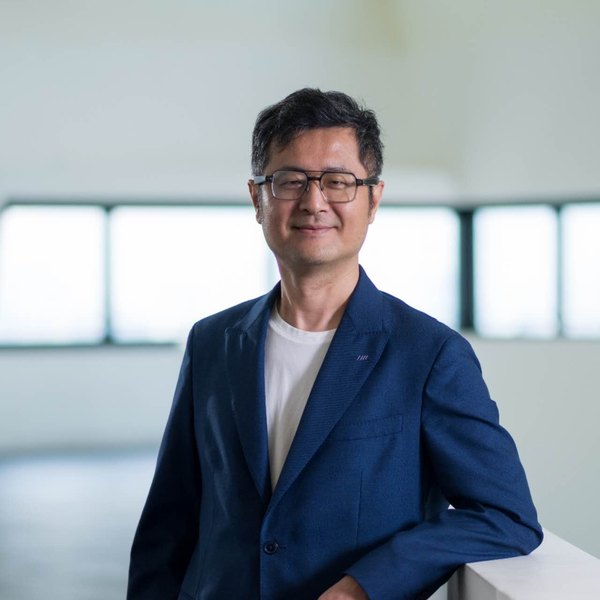
Shengdong Zhao
Shengdong Zhao
Professor
City University of Hong Kong
Pioneered the Heads-Up Computing paradigm and authored its foundational CACM article (2023). 100+ papers at CHI, UIST, and UbiComp, with multiple best-paper awards; co-organized the Heads-Up Computing workshop at UbiComp 2024.
Homepage
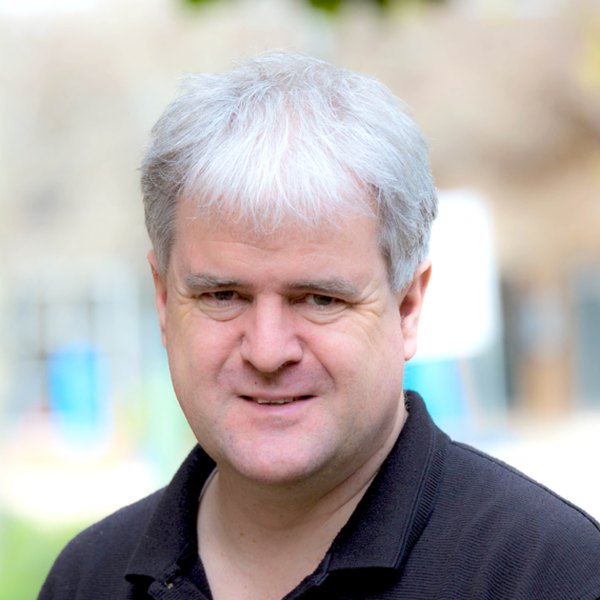
Mark Billinghurst
Mark Billinghurst
Professor of HCI
Univ. of Auckland & Univ. of South Australia
Directs the Empathic Computing Lab with 300+ papers across wearable computing, AR, and mobile interfaces. Fellow of the Royal Society of New Zealand; recipient of the IEEE VR Technical Achievement Award.
Homepage
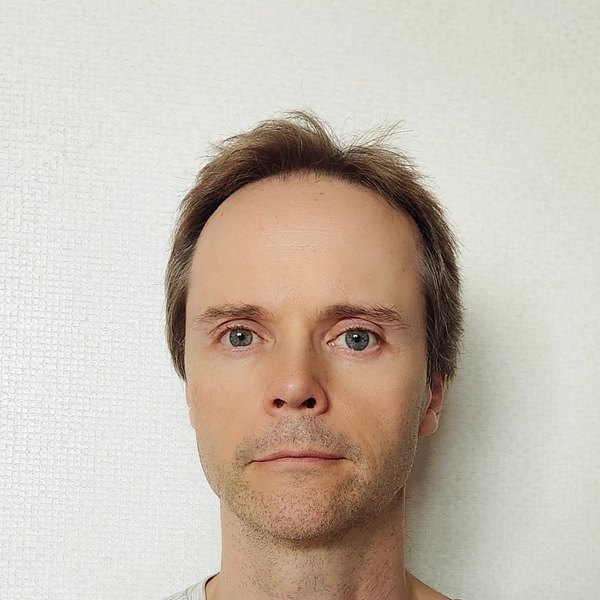
Ian Oakley
Ian Oakley
Professor
KAIST, South Korea
Two decades of wearable technology research, directing the Wearable & Interactive Technology Lab. Work on smartglasses, novel input, and haptics — published widely at CHI, UIST, and IEEE venues; UIST 2025 co-chair.
Homepage

Haiming Liu
Haiming Liu
Associate Professor
University of Southampton, UK
Specializes in interactive information access, multimodal AI interfaces, and human-centred retrieval — directly relevant where keyboard-and-mouse interaction is unavailable. Published at CHIIR, ICTIR, and ECIR; chairs the CHIIR Steering Committee.
Homepage
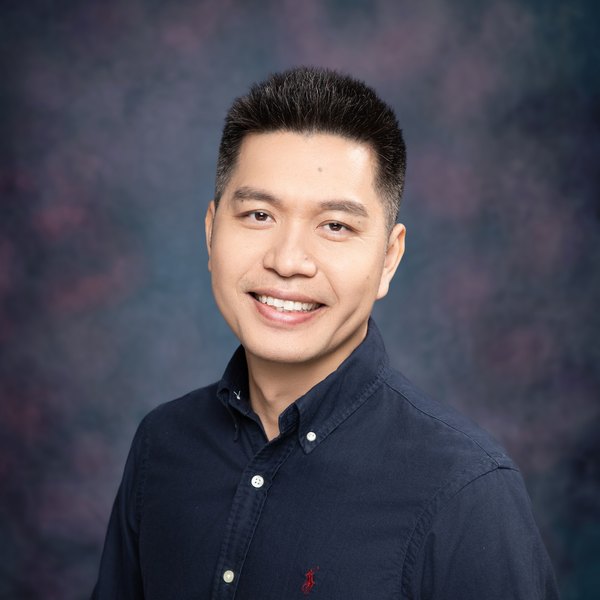
Hai-Ning Liang
Hai-Ning Liang
Associate Professor
HKUST (Guangzhou), China
Researches novel interaction techniques for VR/AR/MR, gaming, and visualisation. Previously Head of Computing at XJTLU; editorial board member for several venues and an active organizer at top HCI conferences.
Homepage

Nuwan Janaka
Nuwan Janaka
Postdoctoral Research Fellow
City University of Hong Kong
PhD (NUS) pioneered interruption management for heads-up optical see-through HMD notifications. 15+ papers at CHI, UbiComp, ISMAR, and HRI; Associate Chair for CHI (2024–26) and UIST (2025–26); TOCHI Distinguished Reviewer.
Homepage